Turista Fronterizo
- Label
- Turista Fronterizo
- Principal Link
- www.turistafronterizo.net
- Description
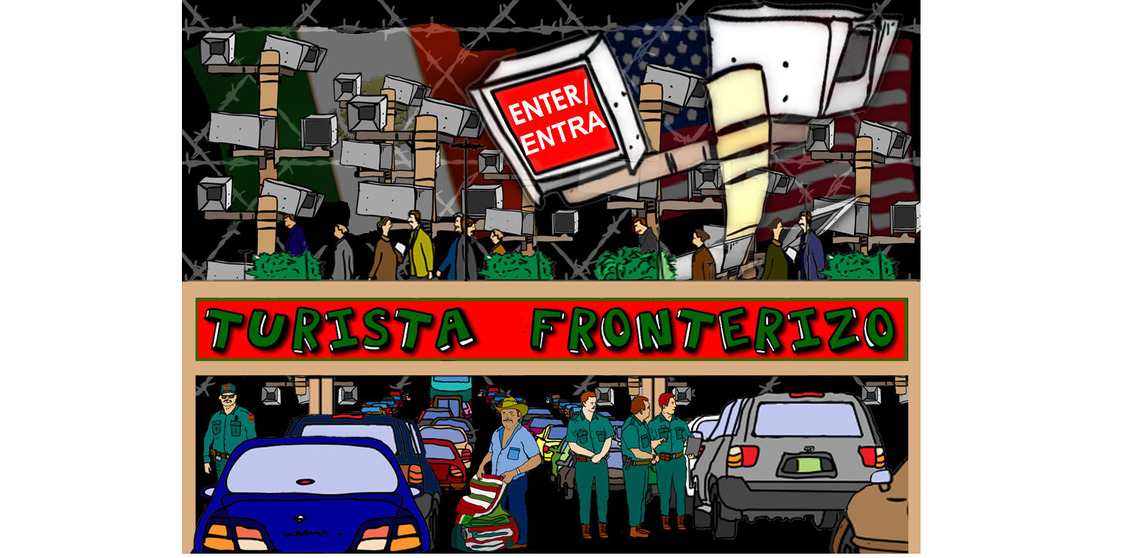
- The project designed and produced a bilingual virtual board game about daily life bicultural negotiation in San Diego/Tijuana for InSite 05. This game was designed using basic HTML, and thus is simple to use, so that populations unaccustomed to gaming will not be deterred by lengthy instructions or complicated maneuvers. The game looks like a board game, such as Monopoly or the Mexican version Turismo, and the movements around the board are simulated through "point and click" interaction with the screen. It ia a game to be played individually, like solitaire, in order to allow people who are not gaming devotees to partake of the game with ease. Players have the option to enter the game in English or Spanish and choose from among four player personae. The language and personae chosen determine the particular perspective on life experiences in the border region that each player have so that the more conversant one is in various idioms of the border, the more one can know about all the angles of the game and the more one has access to "insider" information on both sides of the border. The paths of each player allude to actual experiences that are typical of real life regular border crossers, from elderly Americans who go to Tijuana to buy cheaper prescription drugs medicine, to Mexican day laborers who make their way on foot along Route 5 each day and peddle their skills and trades in San Diego's suburbs. The game represents the US-Mexico border as material locality, and as representative of particular (corporate) practices. It focuses on the maquiladora or assembly plant, arguing that it is central to the work, and stands for post-Fordist late capitalism. Similar, it shows at how socio-economic inequalities of the border are encoded, and critiques the structural inequities of the border economy. In creating a virtual board game that acts as a refracted mirror of the sociocultural space of the US-Mexico border, we retrace the steps of the Surrealists and the Situationists .
- Creators
- Coco Fusco, Ricardo Dominguez
- Status
- inactive